

The ADHD Brain’s 3-Step Morning: Why Consistency Beats Intensity Every Time
TL;DR: The 2026 ADHD Morning Hack
Stop trying to win the morning before 8:00 AM. High-intensity routines lead to high-intensity burnout. To actually stay consistent, choose three non-negotiables: Medicate/Fuel, Move (sans screens), and Visual Check-in. Use an adhd planner pdf to lower the barrier to entry. Remember: We’re aiming for "Productivity-ish," not perfection.
If your brain feels like a computer with 47 browser tabs open, and three of them are playing music you can't find, standard morning routine advice probably feels like a personal attack.
You’ve seen the "aesthetic" TikToks. The 5:00 AM wake-up, the cold plunge, the 90-minute meditation, and the artisanal matcha. For most of us with ADHD, that’s not a routine; that’s a recipe for a mid-morning meltdown.
By 9:01 AM, we’re usually exhausted from the effort of trying to be a person who does those things, and we haven't even started our actual work yet.
Here is the truth: Your morning doesn’t need to be intense to be successful. It just needs to be repeatable.
At Productivity-ish, we believe in progress over perfection. Life is messy, and your brain is a beautiful, chaotic Ferrari with bicycle brakes. Let’s talk about how to actually get out of the garage without crashing into the mailbox.
The Intensity Trap: Why "Doing Too Much" Is Doing Nothing
When we feel behind, our first instinct is to overcompensate. We buy a new 500-page leather-bound journal and promise ourselves that tomorrow we will become a Productivity God.
We plan an intense, 12-step morning routine.
Then, tomorrow comes. We hit snooze once. The 12-step routine is now impossible because we’re ten minutes late. Our ADHD brain says, "Well, the day is ruined. Might as well scroll on our phone for two hours."
This is the all-or-nothing cycle.
The secret to breaking it isn’t working harder; it’s lowering the bar until it’s so easy you can’t say no. We aren't looking for a military drill; we're looking for a gentle nudge.
Step 1: The "Low-Friction" Anchor (Fuel and Focus)
The first step isn't about productivity; it’s about biology.
Research shows that ADHD brains often struggle with decision fatigue the moment our eyes open. To combat this, you need a "Low-Friction Anchor."
This is your non-negotiable sequence that requires zero brainpower. For many, this looks like:
- Medication (if prescribed).
- Protein-heavy breakfast (protein helps with dopamine synthesis).
- Hydration.
Don't overthink the breakfast. A protein bar or a Greek yogurt counts. We aren't filming a cooking show; we're fueling a machine.
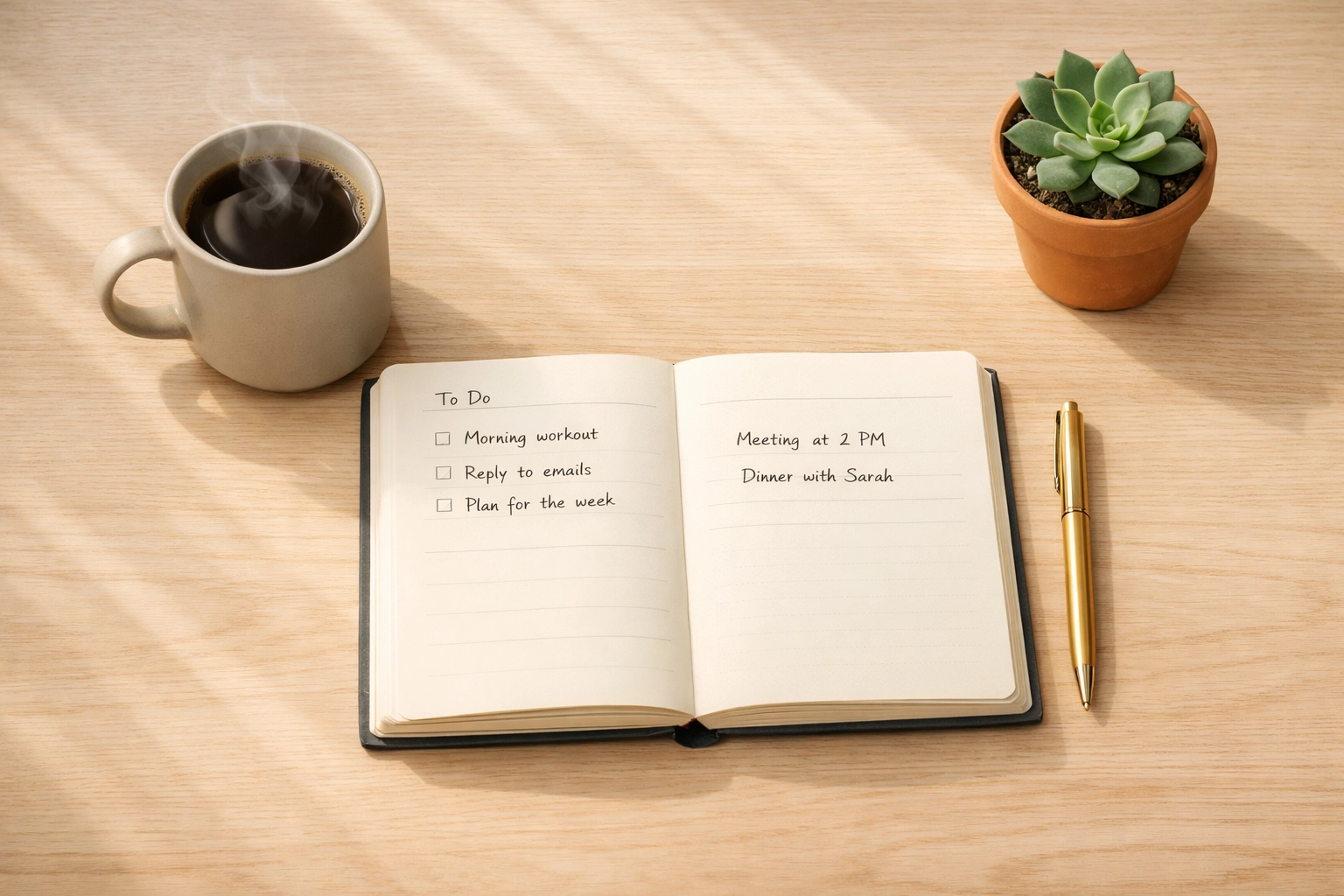
While you eat, this is the time to open your adhd planner pdf. Not to plan your whole life, but just to see what "Today You" needs to handle. Having a visual support is like having an external hard drive for your brain. It holds the information so you don't have to stress about forgetting it.
Step 2: Movement Before Screens (The Dopamine Guardrail)
This is the hardest rule to follow, but it’s the one that will change your life: Do not touch your phone until you have moved your body.
When you wake up, your brain is looking for a hit of dopamine. If you grab your phone, you get a cheap, easy hit from social media or emails. This "hijacks" your focus for the rest of the morning.
Instead, try a "Bout of Movement."
- Stretch for two minutes.
- Walk to the end of the driveway and back.
- Do five jumping jacks.
- Have a 30-second dance party to one song.
This physical activity activates your dopamine pathways naturally. It primes your brain for focus without the "brain fog" that comes from a 20-minute scroll through news headlines.
If you find yourself reaching for the phone out of habit, try leaving a weekly planner printable on top of your device at night. It acts as a physical "speed bump" that reminds you of your intention.

Step 3: The 3-Item Visual Check-In
Once you’re fueled and slightly more awake, it’s time to handle the mental clutter.
Most planners fail us because they ask for too much. They want your "Top 10 Priorities" and your "5-Year Vision." That’s too much noise.
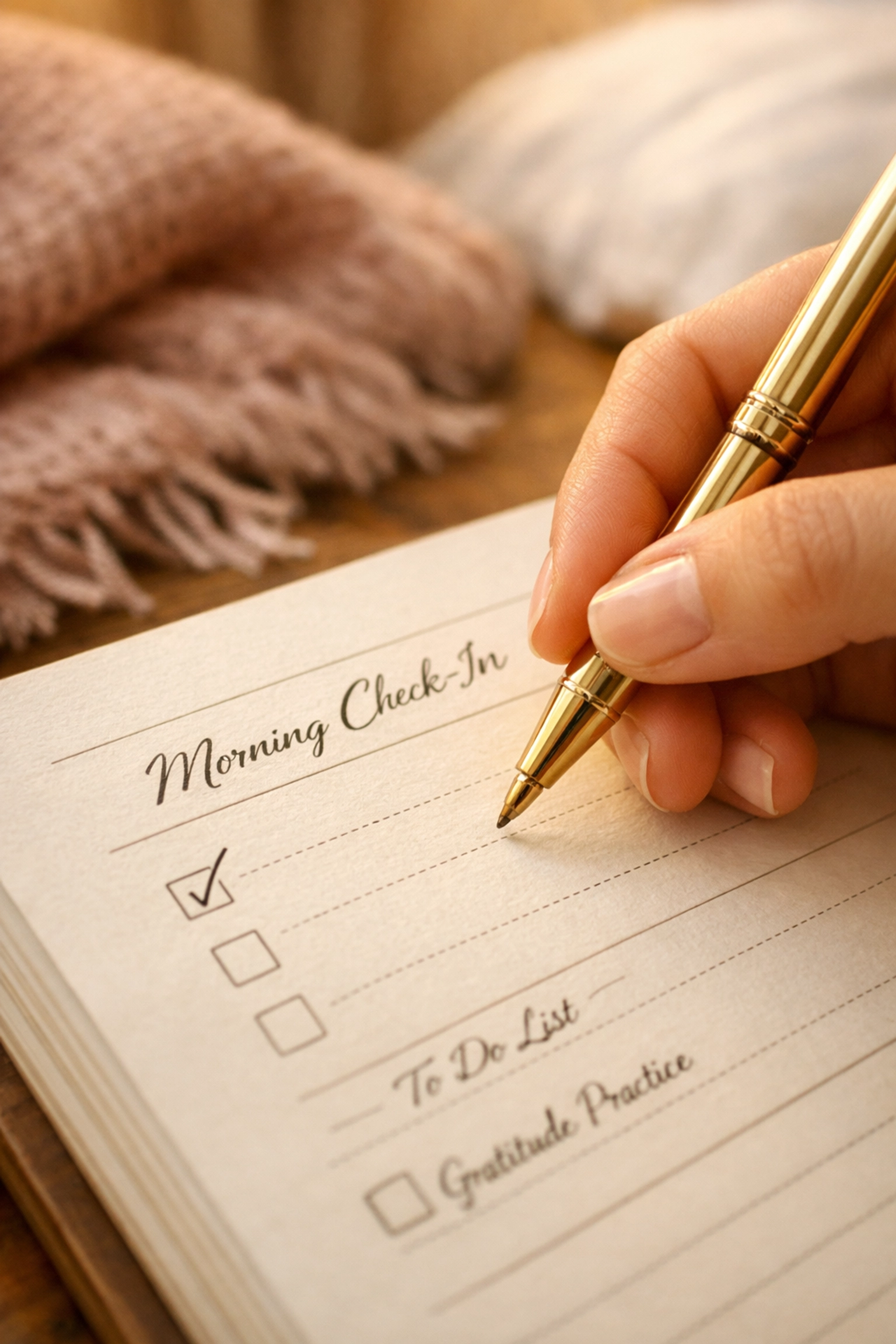
Instead, use your productivity worksheets to identify just three essential items.
Ask yourself: “If I only did three things today and then the world ended (or I just got really tired), which three things would make me feel like I actually accomplished something?”
Everything else is negotiable.
By writing these down in a dedicated space, you’re reducing the "mental load." You no longer have to spend energy remembering the tasks; you only have to spend energy doing them.
If your morning is messy and you only get to Step 1? That’s still a win. That’s Productivity-ish. You’re doing better than you think.
Why Consistency Beats Intensity Every Time
The ADHD brain loves novelty. We love a "fresh start." But intensity is a sprint, and life is a very long, slightly confusing marathon.
If you do an intense routine for three days and then quit for three weeks, you haven't built a habit. You’ve just exhausted yourself.
But if you do a "Productivity-ish" routine: where you just do your three steps, even if you do them in your pajamas: you’re building neural pathways. You’re teaching your brain that you are someone who follows through.
Consistency is the quiet power of doing the small things even when you don’t feel like it.
It’s okay if your morning doesn't look like a Pinterest board. If you got your meds in, moved your legs, and looked at your weekly planner printable, you have officially won the morning.
Tools to Help You Stay "Productivity-ish"
We created our digital products because we were tired of planners that felt like a chore. We wanted something that felt like a supportive friend.
If you're looking for a place to start, our ADHD-friendly printable collections are designed to be low-pressure and high-reward.
- The ADHD Planner PDF: Designed with visual cues and brain-dump sections to clear the fog.
- Weekly Planner Printables: For when you need to see the "Big Picture" without the big panic.
- Productivity Worksheets: Simple, one-page tools to help you navigate specific "stuck" moments.
You don't need a total life overhaul. You just need a better system that understands how your brain actually works.
Check out our full collection of ADHD-friendly tools here and find the one that speaks to your specific brand of chaos.
A Final Note of Grace
Mornings are hard. Executive dysfunction is real. If you woke up late today, or forgot to eat, or spent forty minutes looking for your keys: breathe.
You aren't a failure. You're just navigating a world that wasn't necessarily built for your operating system.
The goal isn't to become a perfect productivity machine. The goal is to create enough structure so that your mind can breathe.
Focus on the progress. Embrace the "ish." You’ve got this.
Want to dive deeper into making your life work for you?
Check out our guide on Trying to Get Your Life Together? Start Here for more realistic, low-stress advice.

Productivity-ish: https://productivity-ish.ca